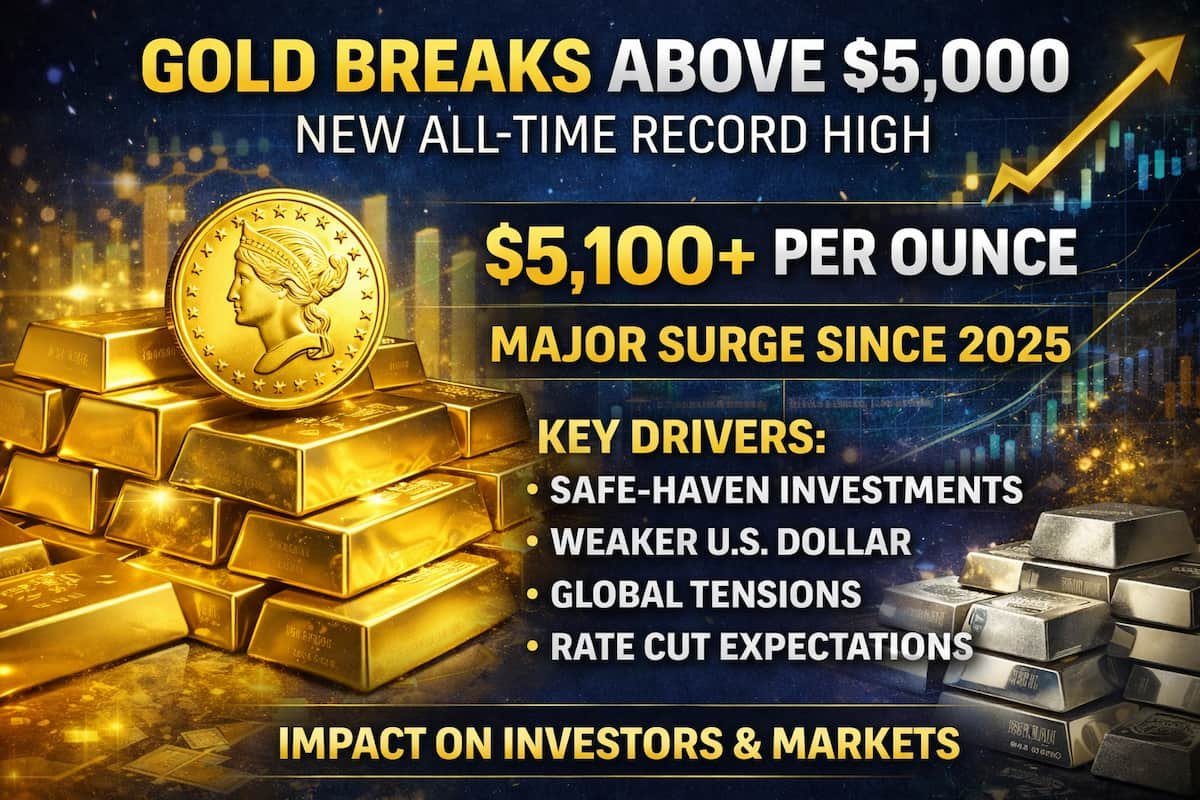
Gold Breaks Historic Threshold Above $5,000
In a market environment defined by uncertainty and risk-off sentiment, gold has surged to a record price above $5,000 per ounce, a milestone not seen in the history of the precious metals market. This unprecedented rally reflects broad investor concerns about geopolitics, weakening confidence in traditional financial assets, and a flight toward safe-haven stores of value.
The Historic Rally — Numbers That Matter
On January 26, 2026, gold prices soared above $5,100 per ounce, extending a powerful rally that has seen bullion climb sharply since 2025. The move was driven primarily by risk aversion among investors and heightened geopolitical tensions.
This breakthrough is significant for several reasons:
- It follows gold’s biggest yearly gain since 1979, with prices rising over 60 % in 2025 alone.
- Spot silver, another traditional safe-haven asset, also reached record highs above $100 per ounce during the same period, underscoring broader commodity strength.
Drivers of the Gold Surge
The rally has been powered by a confluence of macro and geopolitical pressures:
1. Global Risk and Safe-Haven Demand
Investors increasingly view gold as a hedge against uncertainty. Heightened geopolitical tensions — including trade conflicts, policy unpredictability, and concerns about fiscal stability — have prompted money to flow out of riskier assets and into gold.
2. Weakening Dollar Dynamics
As the U.S. dollar softened against other currencies, gold — which is priced in dollars globally — became more attractive to investors holding non-dollar assets, further amplifying demand.
3. Central Bank Participation
Central banks around the world continued their purchases of gold reserves into 2026, an institutional trend that supports prices by tightening available supply and reinforcing gold’s role as a balance sheet hedge.
4. Inflation and Monetary Policy Expectations
With ongoing speculation about interest rate cuts by major central banks, traditional yield-bearing assets became less attractive relative to gold. Since gold yields no interest, its appeal strengthened as expectations grew that real interest rates would remain low.
What This Means for Investors
For analysts and long-term investors, gold’s rally offers a number of insights:
- Portfolio Allocation: Many strategists recommend allocating a portion of investment portfolios (e.g., 5–10 %) to gold or gold-linked instruments as a hedge against systemic risks.
- Commodity Signals: Sustained moves above historic thresholds signal that traditional correlations (like gold falling when rates rise) may break down in extreme risk-off environments.
- Volatility Ahead: While gold can act as a stabilizing hedge, its sharp ascent suggests markets may experience heightened volatility if geopolitical and fiscal uncertainties persist.
Broader Economic Implications
This surge in gold prices has implications beyond bullion markets:
- Currency Valuations: A weaker dollar tends to support commodities but can pressure emerging market economies reliant on dollar-denominated debt.
- Inflation Expectations: Persistent gold strength can influence inflation expectations, prompting central banks to reassess policy frameworks.
- Safe-Haven Behavior: The rally underscores how investors react to policy unpredictability and geopolitical risk, emphasizing the role of traditional safe havens in diversified portfolios.